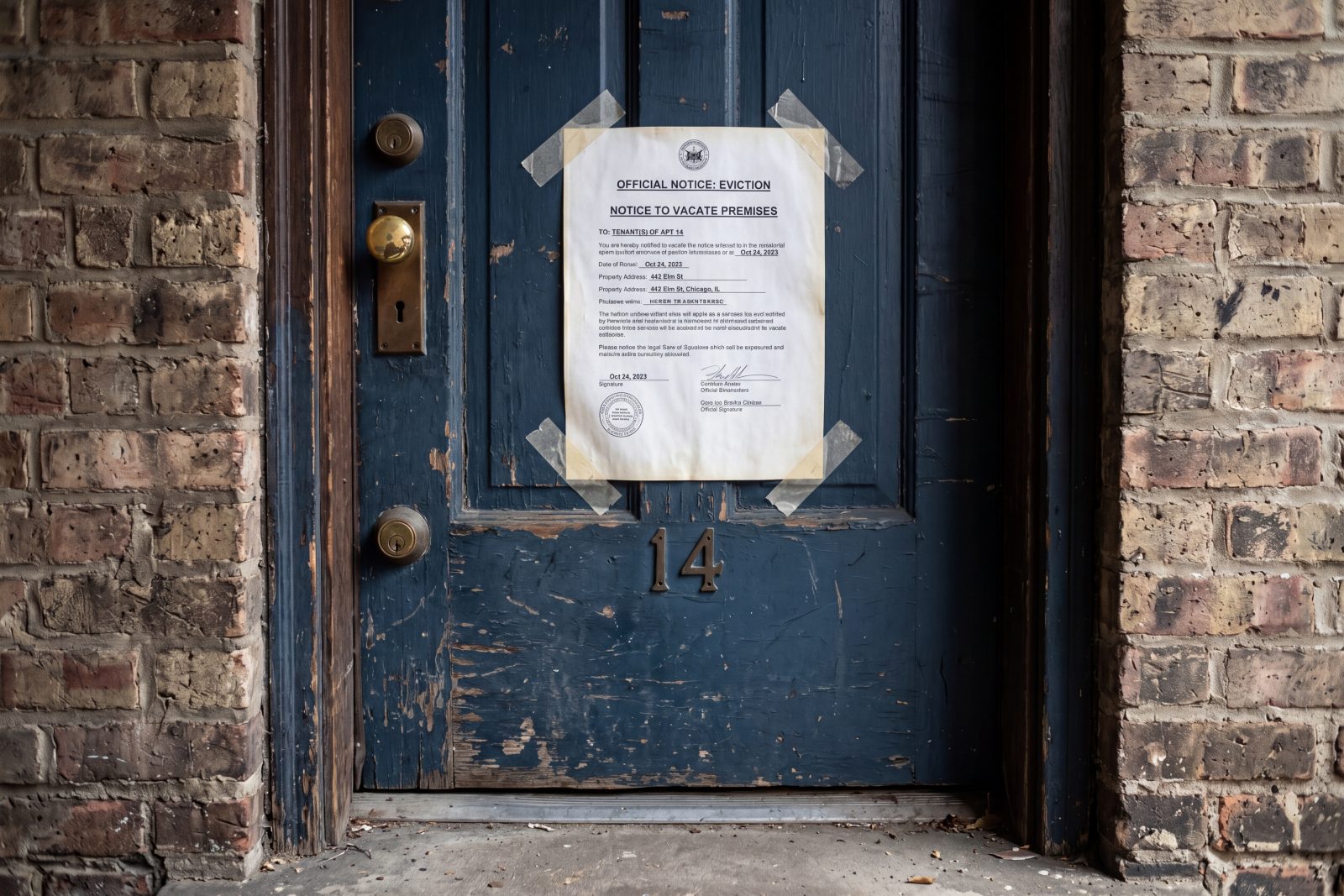
Properly drafted and served eviction notices are the legal foundation of every eviction case. A notice with a missing element, wrong amount, or improper service method gets the case dismissed and the landlord starts over. Use these templates as a starting point, fill in every bracketed field, and verify state-specific requirements before serving.
By NextGen Properties · Updated September 2026 · 12-minute read
Get the Eviction Notice Templates guide for your state
Laws, timelines, fees, and statute cites vary dramatically by state. Pick yours:
Using the wrong notice type is one of the most common (and costly) landlord mistakes. Before reaching for a template, determine which type applies to the situation:
No-fault termination, tenancy < 1 year (varies by state)
N/A, no-fault
60-Day Notice
No-fault termination, tenancy ≥ 1 year (varies by state)
N/A, no-fault
Legal Disclaimer: These templates are educational starting points only. They are not legal advice and do not substitute for consultation with a licensed attorney in your jurisdiction. Eviction notice requirements vary significantly by state and city. Always verify current statutory requirements and have notice language reviewed by counsel before serving.
Notice Templates
Each template below is plain-text, click Copy to paste into your word processor and replace the bracketed fields with your facts. Verify state-specific requirements (notice period length, statutory citations, service rules) before serving.
💰
3-Day Notice to Pay Rent or Quit
When to use: Use when a tenant fails to pay rent on or after the date it is due. Serve as soon as rent is past due, waiting weakens the paper trail.
TO: [Tenant Full Name(s)]
PROPERTY ADDRESS: [Street Address], [City, State, ZIP]
NOTICE TO PAY RENT OR QUIT
YOU ARE HEREBY NOTIFIED that the rent for the above-referenced premises is past due and unpaid as follows:
Rental period: [Month/Year]
Amount of rent due: $[Amount]
Late fees (if applicable and permitted by lease): $[Amount]
TOTAL AMOUNT DUE: $[Total]
You are required to pay the total amount stated above in full within THREE (3) DAYS of service of this notice, excluding the day of service, weekends, and judicial holidays, OR vacate and surrender possession of the premises to the landlord.
Payment may be made to:
[Landlord Name / Property Management Company]
[Address / Payment Method (e.g., online portal, mail)]
[Phone / Email]
IF YOU FAIL to pay the rent in full or vacate within the time stated, legal proceedings will be initiated against you to recover possession of the premises, past-due rent, attorney's fees, court costs, and all other amounts to which the landlord is entitled by law.
Dated: _______________
Landlord/Agent Signature: _______________
Landlord/Agent Printed Name: _______________
📋
3-Day Notice to Perform Covenant or Quit
When to use: Use when a tenant violates a specific lease term other than nonpayment (unauthorized pet, unauthorized occupant, nuisance activity, smoking, property damage). Cite the specific lease clause breached.
TO: [Tenant Full Name(s)]
PROPERTY ADDRESS: [Street Address], [City, State, ZIP]
NOTICE TO PERFORM COVENANT OR QUIT
YOU ARE HEREBY NOTIFIED that you have violated the following covenant(s) of your rental agreement for the above-referenced premises:
Description of Violation:
[Specific description of the lease violation, e.g., "You have an unauthorized dog on the premises in violation of Section 12 of your Lease Agreement dated [Date], which prohibits pets without prior written consent."]
You are required to cure the above violation(s) within THREE (3) DAYS of service of this notice, excluding the day of service, weekends, and judicial holidays, OR vacate and surrender possession of the premises to the landlord.
To cure the violation, you must: [Specific action required, e.g., "Remove the dog from the premises and provide written confirmation to landlord within three days."]
IF YOU FAIL to cure the violation(s) or vacate within the time stated, the landlord will declare a forfeiture of your lease and initiate legal proceedings to recover possession of the premises, damages, attorney's fees, and court costs.
Dated: _______________
Landlord/Agent Signature: _______________
Landlord/Agent Printed Name: _______________
🚫
3-Day Unconditional Notice to Quit
When to use: Use when a tenant has committed a serious or repeated violation that state law lets you terminate without an opportunity to cure: criminal activity on the premises, substantial damage, repeated lease violations after prior notice, or illegal subletting. Requirements vary significantly by state; verify your state's law before using.
TO: [Tenant Full Name(s)]
PROPERTY ADDRESS: [Street Address], [City, State, ZIP]
UNCONDITIONAL NOTICE TO QUIT
YOU ARE HEREBY NOTIFIED that due to the following serious violation(s), you are required to VACATE AND SURRENDER possession of the above-referenced premises within THREE (3) DAYS of service of this notice, excluding the day of service, weekends, and judicial holidays.
Reason for Unconditional Termination:
[Specific description, e.g., "On [Date], you engaged in criminal activity on or near the premises, including [description], which constitutes grounds for unconditional termination of your tenancy under [applicable statute]."]
NO OPPORTUNITY TO CURE IS PROVIDED. You must vacate the premises in their entirety, removing all personal property, by the end of the THREE-DAY notice period.
IF YOU FAIL to vacate within the time stated, legal proceedings will be initiated against you to recover possession of the premises, damages, attorney's fees, and court costs.
Dated: _______________
Landlord/Agent Signature: _______________
Landlord/Agent Printed Name: _______________
📅
30-Day Notice to Terminate Tenancy
When to use: Use for no-fault termination of a month-to-month tenancy where the tenant has lived in the unit for less than one year (or per your state's rule). In just-cause jurisdictions (CA, OR, NJ, NYC, etc.), you must have a legally permitted no-fault reason, so verify before serving.
TO: [Tenant Full Name(s)]
PROPERTY ADDRESS: [Street Address], [City, State, ZIP]
NOTICE OF TERMINATION OF TENANCY. 30 DAYS
YOU ARE HEREBY NOTIFIED that your month-to-month tenancy of the above-referenced premises is terminated effective THIRTY (30) DAYS from the date of service of this notice.
You are required to vacate and surrender possession of the premises, along with all keys and access devices, to the landlord no later than: [Date, 30 days from service date].
[IF IN A JUST-CAUSE JURISDICTION, include the following:]
The reason for this termination is: [State the legal just-cause ground, e.g., "Owner or owner's family member intends to occupy the unit as a primary residence" or "The unit will undergo substantial renovation requiring the unit to be vacated for at least 30 days."]
[IF RELOCATION ASSISTANCE IS REQUIRED, include:]
Enclosed is a check in the amount of $[Amount] representing one month's rent as relocation assistance, as required by [applicable law].
Failure to vacate by the date specified may result in legal proceedings being initiated against you to recover possession of the premises.
Dated: _______________
Landlord/Agent Signature: _______________
Landlord/Agent Printed Name: _______________
📆
60-Day Notice to Terminate Tenancy
When to use: Required in California (and some other states) when the tenant has occupied the unit for one year or more. Also commonly required for no-fault terminations in just-cause jurisdictions regardless of tenancy length. Check your state and local law.
TO: [Tenant Full Name(s)]
PROPERTY ADDRESS: [Street Address], [City, State, ZIP]
NOTICE OF TERMINATION OF TENANCY. 60 DAYS
YOU ARE HEREBY NOTIFIED that your tenancy of the above-referenced premises is terminated effective SIXTY (60) DAYS from the date of service of this notice.
You are required to vacate and surrender possession of the premises, along with all keys and access devices, to the landlord no later than: [Date, 60 days from service date].
[IF IN A JUST-CAUSE JURISDICTION, include the following:]
The reason for this termination is: [State the legal just-cause ground and supporting documentation, e.g., "The owner intends to occupy the unit as a primary residence for at least 12 consecutive months per Civil Code §1946.2(b)(2)(A). Proof of ownership is attached."]
[IF RELOCATION ASSISTANCE IS REQUIRED, include:]
Enclosed is a check in the amount of $[Amount] representing [one month's / local RSO amount] rent as relocation assistance as required by [applicable statute or ordinance]. This payment must be received concurrently with or before this notice.
Failure to vacate by the date specified may result in legal proceedings to recover possession of the premises, damages, attorney's fees, and costs.
Dated: _______________
Landlord/Agent Signature: _______________
Landlord/Agent Printed Name: _______________
How to Serve an Eviction Notice
Service method determines whether the notice is legally valid. Use the highest-tier method available. Improper service is the number-one reason eviction cases get dismissed on procedural grounds.
1. Personal service
Hand the notice directly to the tenant. The most bulletproof method. Document date, time, and who received it.
2. Substituted service
Leave with a competent adult (18+) at the premises and mail a copy. Used when the tenant is not personally available.
3. Post-and-mail ("nail & mail")
Post on the main entrance and mail a copy. Only if no suitable person is found at the premises. Adds extra days to the notice period in many states.
Email and text: not valid
Email and SMS are not valid service in most jurisdictions unless the tenant has separately agreed in writing. Do not rely on this method.
Always document service. Record the date, time, method, who served the notice, and who received it (or where it was posted). In court, the landlord bears the burden of proving proper service. Use a process server for contested evictions.
Before You Serve: Notice Validity Checklist
Correct tenant name(s): use the full legal name(s) as listed on the lease. "John Smith" and "John D. Smith" can matter in court.
Correct property address: include the full unit or apartment number. Notices addressed to the wrong unit are void.
Exact amount owed (for pay-or-quit): do not estimate; verify the precise amount. Overstating the amount due can void the notice in many states.
Correct notice period: verify whether your state counts calendar days or business days, and whether the day of service is excluded.
Specific lease clause citation (for cure-or-quit): cite the exact clause violated. A vague description weakens the notice.
Just-cause language (if in a covered jurisdiction): in California, Oregon, D.C., NYC, and others, no-fault notices must state the specific legal ground and may require a relocation payment.
Relocation assistance enclosed (if required): in California and many local RSO jurisdictions, no-fault notices without the relocation payment are void.
Signature and date: unsigned notices may not be valid. Date the notice on the day of service, not earlier.
Proof of service completed: use a written service declaration or process server affidavit. You will need this in court.
State-Specific Requirements
Notice requirements vary materially by state. Key variations include notice period length, required statutory language, just-cause obligations, and whether certain notice types are even permitted. Review the eviction process guide for your state:
Frequently Asked Questions
What is the difference between a pay-or-quit and a cure-or-quit notice?
A pay-or-quit notice is served when a tenant fails to pay rent and gives the tenant a choice: pay the full amount owed within the notice period or vacate the unit. A cure-or-quit notice (also called a "perform or quit" or "comply or quit") is used when a tenant has violated a lease term other than nonpayment, keeping an unauthorized pet, causing a nuisance, having unauthorized occupants, or violating other specific provisions. The tenant is given the notice period to correct ("cure") the violation or vacate. If neither notice is complied with, the landlord may then file an unlawful detainer (eviction) lawsuit. The distinction matters legally: using the wrong notice type is a common cause for eviction case dismissal.
How must an eviction notice be served on a tenant?
Most states require eviction notices to be served using one or more of the following methods: (1) Personal service, handing the notice directly to the tenant; (2) Substituted service, leaving the notice with a person of suitable age and discretion at the premises and mailing a copy; (3) Post-and-mail, if the tenant cannot be found and there is no one suitable present, posting the notice on the main entrance and mailing a copy (sometimes called "nail and mail"). Email and text message service are NOT valid in most jurisdictions unless the tenant has separately agreed in writing. Service must be documented, note the date, time, method, and person served. Improper service is one of the most common reasons eviction cases are dismissed.
What information must be included in an eviction notice to make it valid?
A valid eviction notice generally must include: (1) the tenant's full legal name as it appears in the lease; (2) the full address of the rental unit including apartment number; (3) the reason for the notice; (4) the amount owed if it is a pay-or-quit notice; (5) the specific date by which the tenant must pay, cure, or vacate; (6) the landlord's or property manager's name, address, and contact information for payment; (7) the method by which payment or cure can be made; and (8) in states like California, a reference to the applicable statute (e.g., Civil Code §1161). Using a notice that omits required elements, even small ones, can result in dismissal.
Does the notice period count the day the notice is served?
Typically no. In most states, the notice period begins on the day after service, the day of service is not counted. For a 3-day notice served on a Monday, the tenant typically has until end of day Thursday to comply. However, some states count business days only (excluding weekends and holidays), while others count calendar days. California counts calendar days and excludes the date of service. Errors in calculating the notice period, even by one day, can invalidate the notice and require re-service.
Can a landlord accept partial rent after serving a 3-day pay-or-quit notice?
Accepting any payment after serving a pay-or-quit notice can waive the notice and require the landlord to start the process over. In many states, accepting even a partial payment from the tenant constitutes acceptance of the tenancy for that period and voids the pending notice. To avoid this, landlords should clearly communicate in writing, before serving the notice, that only full payment of all amounts due will be accepted. In some jurisdictions (California, for example), landlords can accept partial payment with a written reservation of rights, but this approach requires careful legal review.
When should a 30-day notice be used versus a 60-day notice?
The required notice period for a no-fault termination depends on state law and the length of the tenancy. Most states require 30 days for month-to-month tenancies. California requires 30 days if the tenant has lived there for less than one year, and 60 days if the tenant has lived there for one year or more. In jurisdictions with just-cause eviction laws, such as California (AB 1482), Oregon (SB 608), and New Jersey, no-fault terminations are restricted to specified grounds and the required notice period may be longer (60 to 90 days). Local ordinances may impose longer notice periods than state law; local law prevails if more protective.
Don't risk a dismissed case over a defective notice.
NextGen Properties prepares every eviction notice to current statutory standards, served by a licensed process server with a documented service declaration, so your case starts on solid legal footing.