
Landlord Insurance, Idaho 2026
Primary hazards, required endorsements, and FAIR plan availability for Idaho rental properties
The policy on your own home will not protect a house you rent out. Once tenants move in, a standard homeowner policy can be voided for a material misrepresentation of occupancy, which is why Idaho landlords insure rentals on a landlord policy built on a dwelling-fire (DP-3) form. The Idaho Department of Insurance describes a landlord policy as covering the dwelling structure against standard losses such as fire, smoke, wind, and hail, plus fair rental value if tenants are displaced and liability for tenant injuries.
No Idaho statute forces you to carry it. The pressure comes from two other places: your mortgage lender, who requires hazard insurance as a loan covenant, and the federal flood rule that applies to certain properties. This page covers how DP-3 differs from a homeowner policy, when coverage is effectively required, and the Idaho-specific risk factors that move the premium.
Primary Hazards for Idaho Landlords
DP-3 vs. a homeowner policy: why the difference matters
A homeowner (HO-3) policy assumes you live in the house. A rental is a different risk, so it is written on a dwelling-fire form instead. The dwelling-fire family has three tiers: DP-1 (basic, named-peril, often actual cash value), DP-2 (broad, more named perils), and DP-3 (special form, open-peril coverage on the structure). Most Idaho single-family rentals are insured on DP-3 because it covers any cause of loss to the building except those specifically excluded, and it typically pays on a replacement-cost basis.
The core swap is contents. A homeowner policy carries heavy personal-property coverage; a landlord DP-3 carries little or none, because the tenant owns the contents. The Idaho Department of Insurance is explicit that a landlord's policy covers the structure, not the tenant's belongings, and that a tenant needs a separate renters policy for their own property. In exchange, a landlord policy adds coverages a homeowner form lacks: fair rental value (lost rent while the unit is uninhabitable after a covered loss) and landlord liability for injuries tied to the rental.
Is landlord insurance required in Idaho?
By statute, no. Idaho does not require a landlord to carry property insurance, and it does not require tenants to buy renters insurance. In practice, coverage is still effectively mandatory for most owners because of two other requirements:
- Your lender. If the rental has a mortgage, the loan agreement requires you to keep hazard insurance on the building for the life of the loan. Let it lapse and the servicer can force-place a policy that costs more and protects only the lender.
- Federal flood rule. If the property sits in a FEMA-designated Special Flood Hazard Area and carries a mortgage from a federally regulated or government-backed lender, flood insurance is federally required through the NFIP. A standard DP-3 does not cover flood, so this is a separate policy.
Even where nothing compels it, going bare on a rental exposes your entire net worth to a single fire or liability claim. Idaho landlords also commonly require renters insurance as a lease condition, which is permitted and shifts tenant-contents and tenant-liability risk off the owner.
Idaho risk factors that drive your premium
Idaho is a comparatively low-cost property-insurance state, but where the rental sits matters more than the state average. The main cost drivers here are:
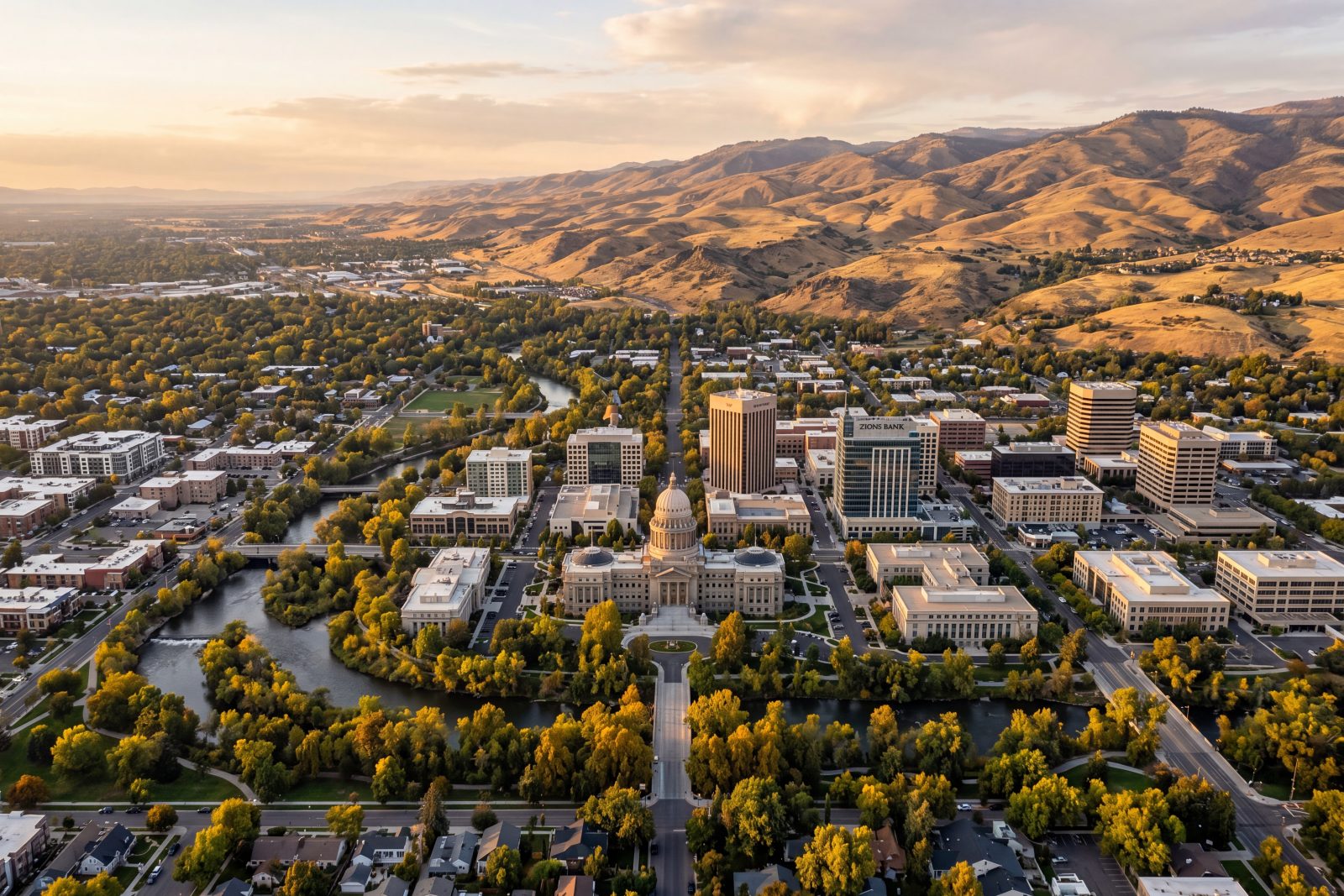
- Wildfire / wildland-urban interface. This is the dominant Idaho factor. Rentals in the forested foothills and mountain communities, from the Boise foothills to central Idaho, sit in high wildfire-exposure zones that raise premiums, tighten underwriting, and can require brush-clearance or defensible-space conditions. Wildfire itself is generally a covered peril on a standard policy, but the exposure prices into the rate.
- Flood. Excluded from DP-3 and written separately through the NFIP. Riverine and snowmelt flooding along the Snake, Boise, and Payette systems drives whether you need it and what it costs.
- Liability. Tenant and guest injury claims are the open-ended exposure. Higher liability limits and an umbrella cost more but are the cheapest protection per dollar for a landlord.
- Building specifics. Age, roof condition, replacement cost, distance to a fire station and hydrant, and prior claims all move the number regardless of geography.
National rule of thumb: property insurance is often budgeted at a low single-digit percentage of a rental's value or rent, but treat any premium quote as property-specific rather than a state average.
How to structure the policy
Build the DP-3 around four decisions. First, insure the structure to replacement cost, not market value or the purchase price, so a total loss actually rebuilds. Second, carry fair rental value sized to your real rent so a fire does not also erase your cash flow while the unit is rebuilt. Third, set liability limits high and consider an umbrella that sits over every property you own. Fourth, add the flood policy separately if the property is in or near a Special Flood Hazard Area, whether or not the lender demands it.
Two clauses to confirm in writing: require the tenant to carry renters insurance and to name you as an additional interest, and ask your carrier about loss-of-rents duration limits. Idaho's wildfire season also makes it worth confirming there is no separate wildfire deductible or brush-clearance condition buried in the policy.
Required / Recommended Endorsements for Idaho
- Wildfire endorsement for WUI-zone properties (Boise foothills, northern Panhandle, Teton County)
- Earthquake endorsement (Idaho is seismically active, Borah Peak M7.3 in 1983)
Idaho Insurance Department
The Idaho state insurance department regulates admitted carriers, investigates claim disputes, and maintains a licensed-agent directory.
This page reflects Idaho Department of Insurance guidance on landlord, homeowner, and renters coverage, FEMA/NFIP rules on flood insurance requirements, and Idaho landlord-tenant law. Coverage terms, exclusions, and premiums vary by carrier and property; confirm specifics with a licensed Idaho agent and read your actual policy. The Idaho Department of Insurance (208-334-4250) can answer consumer questions. This is general information, not legal or insurance advice.
Frequently Asked Questions
Does Idaho law require landlords to have insurance?
No. Idaho has no statute requiring a landlord to carry property insurance, and none requiring tenants to buy renters insurance. Coverage is usually still required in practice by your mortgage lender (hazard insurance as a loan covenant) and, in flood zones, by federal rule.
What is a DP-3 policy and why do Idaho landlords use it?
DP-3 is the special-form dwelling-fire policy: the broadest of the three dwelling-fire tiers (DP-1, DP-2, DP-3). It covers the rental structure on an open-peril, replacement-cost basis and adds fair rental value and landlord liability. It is the standard form for insuring a rented single-family home in Idaho.
Can I just keep my homeowner policy after I rent the house out?
No. A homeowner (HO-3) policy assumes you occupy the home. Once it becomes a rental, the insurer can deny a claim or void the policy for misrepresenting the occupancy. You need a landlord/dwelling-fire policy instead.
Does my landlord policy cover my tenant's belongings?
No. The Idaho Department of Insurance is clear that a landlord policy covers the structure, not the tenant's contents. Tenants need their own renters policy for their belongings, and many Idaho landlords require it as a lease condition.
Is flood or wildfire covered by an Idaho landlord policy?
Wildfire is generally a covered peril on a standard landlord policy, though high wildfire exposure raises the premium. Flood is not covered and must be bought separately, usually through the federal NFIP; it is federally required for mortgaged properties in a FEMA high-risk flood zone.
What drives landlord insurance cost the most in Idaho?
Location within the state matters more than the state average. The biggest Idaho driver is wildfire exposure in wildland-urban-interface areas; flood zone status, liability limits, and the building's age, roof, and replacement cost also move the premium.
Related Idaho Landlord Guides
Hazard data: FEMA National Risk Index (fema.gov) and USGS National Seismic Hazard Maps (usgs.gov/programs/earthquake-hazards). FAIR plan data: NAIC and state insurance department websites. Last updated October 23, 2026. For informational purposes only, not insurance or legal advice. Consult a licensed insurance agent for your specific property and coverage needs.