
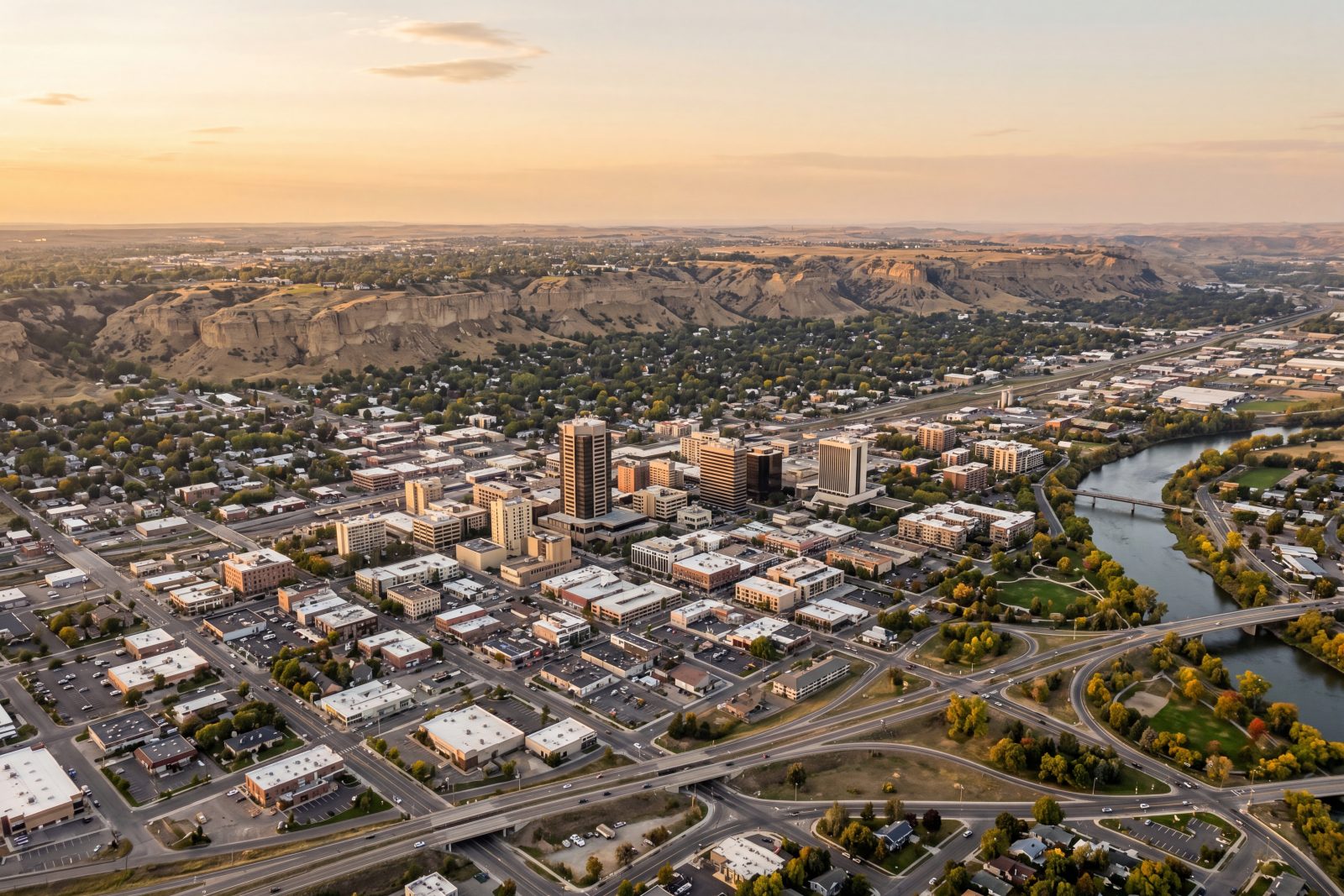
Landlord Insurance, Montana 2026
Primary hazards, required endorsements, and FAIR plan availability for Montana rental properties
If you rent out a house in Montana, a standard homeowner policy will not protect you. Homeowner forms are written for owner-occupants, and insurers can deny a claim once a property becomes a non-owner-occupied rental. Landlords instead buy a dwelling-fire policy, most commonly the DP-3 (Dwelling Fire, Special Form), which is built around a tenant-occupied building and adds the liability and lost-rent protection a homeowner form leaves out.
Montana does not legally require landlords to carry this coverage, but almost every financed rental carries it anyway because the lender demands it. And Montana's risk profile, the state ranks second nationally for homes at high risk of catastrophic wildfire, has been pushing premiums up sharply. This page explains how DP-3 differs from a homeowner policy, when coverage is required, and the specific factors that drive what you pay in Montana.
Primary Hazards for Montana Landlords
DP-3 vs. a homeowner policy: what actually changes
The core difference is who the policy expects to live in the house. A homeowner (HO-3) policy assumes the owner occupies the property and insures their personal belongings inside it. The moment you hand the keys to a tenant, that assumption breaks, and a claim can be denied for a misrepresented occupancy.
A DP-3 (Dwelling Fire, Special Form) is the landlord equivalent. It is an open-perils policy, it covers every cause of loss except those specifically excluded, and it pays claims at replacement cost rather than depreciated value. Just as important, a landlord DP-3 is normally packaged with two things a homeowner form does not give a rental owner:
- Landlord liability, defense and damages if a tenant or guest is injured on the property and you are found responsible.
- Loss of rents (fair rental value), replacement income while a covered loss makes the unit uninhabitable.
What a DP-3 does not cover is the tenant's own possessions. That gap is filled by the tenant's renters insurance, not your policy.
Is landlord insurance required in Montana?
By state law: no. Nothing in the Montana Residential Landlord and Tenant Act of 1977 (Title 70, chapter 24, MCA) requires a landlord to carry property or liability insurance. Montana imposes no insurance mandate on rental owners.
By your lender: almost always. If the property carries a mortgage, the loan documents will require dwelling coverage naming the lender through a mortgagee clause, and the lender must be listed on the policy. On DSCR and other investor loans, carriers and lenders typically want the annual premium paid at closing or escrowed into the monthly payment so coverage never lapses.
Even where no loan exists, going bare on a Montana rental means absorbing a total fire or wildfire loss and any liability judgment out of pocket. Separately, landlords in Montana routinely require tenants to carry renters insurance as a lease term, that protects the tenant's belongings and shifts some liability risk, but it is not a substitute for the owner's own DP-3.
What Montana landlord insurance costs, and why
Premiums are property-specific, so treat any statewide figure as a starting point, not a quote. Industry data puts the average Montana landlord-insurance premium at about $1,223 per year, with another estimate near $129 per month (roughly $1,546 per year). Landlord policies generally run somewhat higher than a comparable homeowner policy because of the added liability and lost-rent coverage and the elevated risk of a tenant-occupied building.
For context on the direction of the market, Montana's average homeowner premium ended 2025 at $2,399, an 18% jump in 2025 alone (more than $300) and about 20% since 2023. The same forces, wildfire, hail, and rising rebuild costs, push landlord rates in the same direction. Rapid appreciation compounds it: replacement-cost figures rise with home values, and Bozeman values are up over 85% since 2015 with Missoula near 78%.
The Montana risk factors that drive your premium
Where your rental sits in Montana matters more than almost anything else on the application. The dominant driver is wildfire: Montana ranks second in the nation for the share of homes at high risk of catastrophic wildfire, nearly 70% of the state's recorded wildfires have occurred since 2000, and wildland-urban interface zones now exceed 6.2 million acres, a 23% increase in high-risk area since 2010. Western Montana properties are the most exposed and the most expensive to insure.
Hail is the eastern-plains counterpart: Montana logged roughly 20 hail events in 2025, damaging homes in Billings, Great Falls, Helena, Glendive, Glasgow, Lewistown, and Missoula. Winter freeze adds another layer, northern counties routinely fall below -20°F, driving burst-pipe and snow-load claims that are common causes of loss on vacant or between-tenant units.
Hurricanes are a non-factor in landlocked Montana, and flood is excluded from every standard dwelling-fire and homeowner policy, if your rental sits near the Yellowstone, Clark Fork, or another floodplain, you need separate NFIP or private flood coverage. On the upside, House Bill 136 lets Montana insurers offer premium reductions for wildfire mitigation such as ignition-resistant roofs and fire-resistant siding, so hardening a western-Montana rental can directly lower the bill.
Required / Recommended Endorsements for Montana
- Wildfire endorsement for properties in or near Lolo, Flathead, or Gallatin national forests
- NFIP flood for Yellowstone River, Clark Fork, or Flathead River properties
Montana Insurance Department
The Montana state insurance department regulates admitted carriers, investigates claim disputes, and maintains a licensed-agent directory.
Montana Insurance Department →
This page summarizes publicly available Montana statute and insurance-market data as of 2026. Legal points reference the Montana Residential Landlord and Tenant Act of 1977 (Title 70, chapter 24, MCA). Premium and risk figures are drawn from the Montana Commissioner of Securities and Insurance (csimt.gov), Insurify's 2025 Montana home-insurance analysis, and published state landlord-insurance guides; specific dollar amounts and percentages are sourced to those datasets. Insurance forms, rates, and eligibility vary by carrier and property, confirm coverage details and any lender requirement with a licensed Montana insurance agent and your loan documents before relying on them.
Frequently Asked Questions
Is landlord insurance legally required in Montana?
No. The Montana Residential Landlord and Tenant Act of 1977 (Title 70, chapter 24, MCA) contains no requirement that a landlord carry property or liability insurance. Coverage becomes effectively mandatory only when a lender requires it as a condition of a mortgage or DSCR loan.
Can I use my regular homeowner policy on a Montana rental?
No. Homeowner (HO-3) policies are written for owner-occupants, and a carrier can deny a claim once the property is tenant-occupied. Rentals need a dwelling-fire policy, usually a DP-3, which adds landlord liability and loss-of-rent coverage a homeowner form omits.
How much does landlord insurance cost in Montana?
Cost is property-specific, but the average Montana landlord premium is around $1,223 per year, with some estimates near $129 per month. Rates depend heavily on location, wildfire-exposed western Montana and hail-prone eastern plains cost more, plus the building's age, roof, coverage limits, and deductible.
Why are Montana insurance premiums rising so fast?
Wildfire and hail exposure, higher rebuild costs, and a shrinking pool of carriers. Montana's average homeowner premium rose 18% in 2025 to $2,399 and about 20% since 2023, and the same pressures lift landlord rates. Montana now ranks second nationally for homes at high wildfire risk.
Does a DP-3 policy cover my tenant's belongings?
No. A landlord DP-3 covers the building, your liability, and lost rent, but not the tenant's personal property. Tenants need their own renters insurance for that, which Montana landlords commonly require as a lease term.
Does landlord insurance cover wildfire and flood in Montana?
A DP-3 open-perils policy covers wildfire unless it is specifically excluded, which is why western-Montana rentals cost more to insure. Flood is never covered by a standard dwelling-fire or homeowner policy, you need separate NFIP or private flood coverage if the property sits in a floodplain.
Related Montana Landlord Guides
Hazard data: FEMA National Risk Index (fema.gov) and USGS National Seismic Hazard Maps (usgs.gov/programs/earthquake-hazards). FAIR plan data: NAIC and state insurance department websites. Last updated October 23, 2026. For informational purposes only, not insurance or legal advice. Consult a licensed insurance agent for your specific property and coverage needs.