
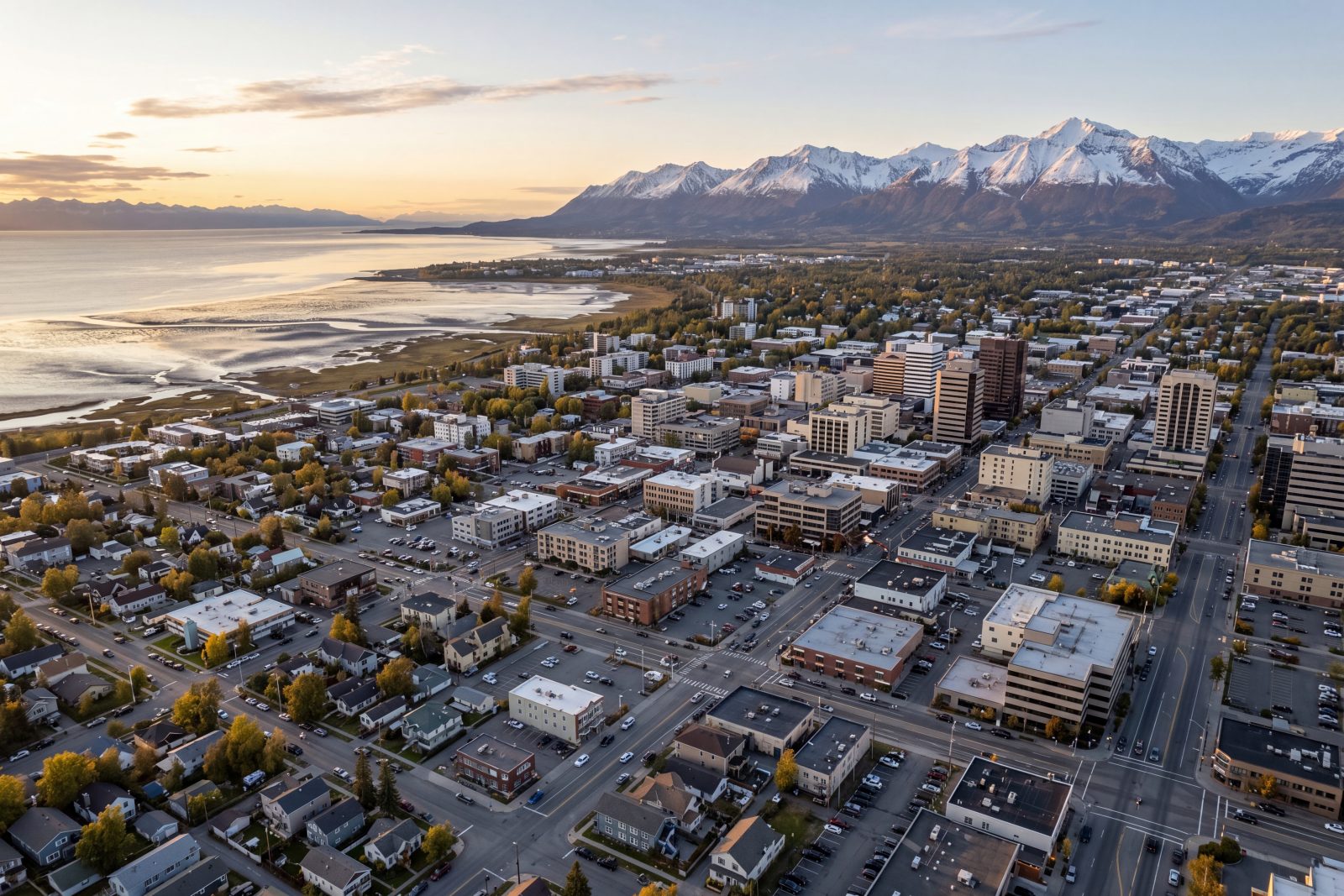
Property Tax Rate in Alaska 2025
Effective rate, median annual bill, homestead exemption, and assessment cap rules under AS § 29.45.030
Statutory authority: AS § 29.45.030
What the median Alaska homeowner pays
Median bill is the actual ACS 2022 figure for owner-occupied housing units in Alaska. Your specific bill will vary by county and municipality, local mill rates can swing the effective rate by 30%+ within a single state.
Property tax is one of the few operating costs a landlord can't renegotiate, and in Alaska it works differently than almost anywhere else. There is no statewide property tax, the constitution and AS Title 29, Chapter 45 hand taxing authority to boroughs and cities, so your bill depends entirely on where the building sits. Statewide, Alaska's effective property tax rate on owner-occupied housing is about 0.94% of value (Tax Foundation), near or slightly below the national average. The catch for rental owners: the exemptions that pull an owner's bill down are tied to living in the home, and a rental doesn't qualify.
No statewide tax, the borough sets your rate
Alaska is the rare state with no statewide property tax. Under the Alaska Constitution and AS Title 29, Chapter 45 (Municipal Taxation), only boroughs and cities may levy tax on real property. That has two practical consequences for a landlord. First, there is no single "Alaska rate" to plan around, a fourplex in Anchorage, Fairbanks, or the Kenai Peninsula Borough can carry very different mill rates set by each local government. Second, property that sits in the Unorganized Borough, outside any organized borough or incorporated city, may carry no local property tax at all, because there is no local body levying one. Before you underwrite a deal, pull the mill rate from the specific borough or city assessor, the statewide figure is a starting point, not your bill.
The 0.94% effective rate, and what it hides
The Tax Foundation puts Alaska's effective property tax rate on owner-occupied housing at 0.94% of value. That sits close to the national average, which typically lands near 1%. But an "effective rate" is a statewide blend, and Alaska's spread is unusually wide because each jurisdiction sets its own mill rate and the state has large untaxed areas. Two things follow. One, a blended 0.94% can badly understate a bill in a high-mill urban borough, so treat it as a benchmark, not a quote. Two, because Alaska has no state income tax and no state sales tax, local governments lean harder on property and (in some places) severance and local sales taxes for revenue, which keeps property tax central to the ledger even where the headline rate looks modest.
Owner-occupancy exemptions your rental can't claim
Alaska's meaningful exemptions are gated on the owner living in the home, the exact gap that separates a landlord from a homeowner. Under AS 29.45.050, a municipality may (by ordinance, often with voter approval) exempt up to $50,000 of the assessed value of an owner's primary residence, with the voter-authorized exemption capped at $75,000 of assessed value. Separately, AS 29.45.030 requires every taxing municipality to exempt the first $150,000 of assessed value of a qualifying primary residence for residents age 65 or older, disabled veterans (50%+ service-connected disability), and certain surviving spouses. Every one of these is a primary-residence / permanent-home exemption. A non-owner-occupied rental does not qualify, so a landlord generally pays on the full assessed value, while the owner-occupant next door may pay on far less. The one partial exception is a live-in owner of a multi-unit building, who may claim the residence portion they actually occupy; confirm the split with the local assessor.
What it means for your returns
The exemption gap is the number that matters most to a rental pro forma. If a comparable owner-occupied home carries the same mill rate but shaves $50,000-$150,000 off assessed value first, your rental's tax line can run meaningfully higher on an identical property. Build the full-assessed-value tax bill into your net operating income from day one, and verify the current mill rate and any local caps directly with the borough or city assessor, not off a statewide average. On the affordability side, tenants often budget against the national 30% rule (housing at or below 30% of gross income); that's a household guideline, not Alaska tax law, but it's the ceiling that governs how much of a property tax increase you can realistically pass through in rent. Where you can pass it through, do it deliberately; where the market can't absorb it, the tax lands on your margin.
Homestead Exemption Detail for Alaska
$150,000 of assessed value for seniors 65+ and disabled veterans; no statewide rate.
The exemption is granted under AS § 29.45.030. To claim it, owner-occupants must typically file an application with the county assessor (most states require filing once, with renewal triggered only by change of ownership or use). Failure to file the application means full taxation at the non-homestead rate.
How Alaska Compares Nationally
- U.S. national median effective rate: ~1.02% (Tax Foundation 2024).
- Highest effective rate state: New Jersey (2.23%).
- Lowest effective rate state: Hawaii (0.32%).
- Alaska rank: Effective rate of 1.04%, see the full ranking table.
Sources & Methodology
- Effective rate: Tax Foundation, "Property Taxes Paid as a Percentage of Owner-Occupied Housing Value," 2024 publication using U.S. Census Bureau American Community Survey 2022 5-year estimates (Tables B25103 and B25077).
- Median bill: U.S. Census Bureau ACS 2022 5-year, Table B25103 (Median Real Estate Taxes Paid for Owner-Occupied Housing Units).
- Homestead exemption and assessment cap: AS § 29.45.030 and Alaska Department of Revenue / Assessor publications.
Related Guides for Alaska Landlords
Figures on this page are drawn from primary and authoritative sources: Alaska's municipal-taxation statutes (AS 29.45.030 and AS 29.45.050), the Alaska Division of Community and Regional Affairs (Property Tax and Property Tax Exemptions references), and the Tax Foundation's Alaska effective-rate data. Because Alaska property tax is set borough-by-borough with no statewide levy, mill rates and local exemptions change by jurisdiction and year, verify the current rate and exemption ordinances with the specific borough or city assessor before relying on them for underwriting. This overview is general information for rental owners, not legal or tax advice.
Frequently Asked Questions
Does Alaska have a statewide property tax?
No. Alaska levies no statewide property tax. Under the state constitution and AS Title 29, Chapter 45, only boroughs and cities may tax real property, so your rate is set locally, and property in the Unorganized Borough may have no property tax at all.
What is Alaska's effective property tax rate?
The Tax Foundation reports an effective property tax rate of about 0.94% of owner-occupied housing value statewide. That is a blended benchmark; actual mill rates vary sharply by borough and city, so confirm the rate with the local assessor for the property's location.
Do rental properties in Alaska get a homestead or residential exemption?
Generally no. Alaska's residential exemptions are tied to the owner's primary residence. The optional exemption under AS 29.45.050 (up to $50,000, capped at $75,000 of assessed value) and the mandatory senior/disabled-veteran exemption under AS 29.45.030 (first $150,000) all require owner occupancy, so a non-owner-occupied rental typically pays on full assessed value.
What is the exemption for seniors and disabled veterans?
Under AS 29.45.030, every taxing municipality must exempt the first $150,000 of assessed value of a qualifying primary residence for residents 65 or older, disabled veterans with a 50%+ service-connected disability, and certain surviving spouses. It applies to a personal residence, not a rental.
If I live in one unit of my rental building, can I claim any exemption?
Potentially. Owner-occupancy exemptions apply to the portion of a multi-unit property that is the owner's actual primary residence. A live-in owner may be able to exempt the residence portion they occupy while the rented units remain fully taxable. Confirm the split with the local borough or city assessor.
How does the 30% rule relate to Alaska property tax?
The 30% rule is a national affordability benchmark, housing costs at or below 30% of a household's gross income, not an Alaska tax provision. It doesn't change your tax bill, but it caps how much of a property tax increase a landlord can realistically recover through higher rent.
Effective rate source: Tax Foundation analysis of Census ACS 2022 (published 2024). Statutory citation: AS § 29.45.030. Last updated November 21, 2026. For informational purposes only, not tax or legal advice. Consult a CPA or tax attorney for your specific situation.