
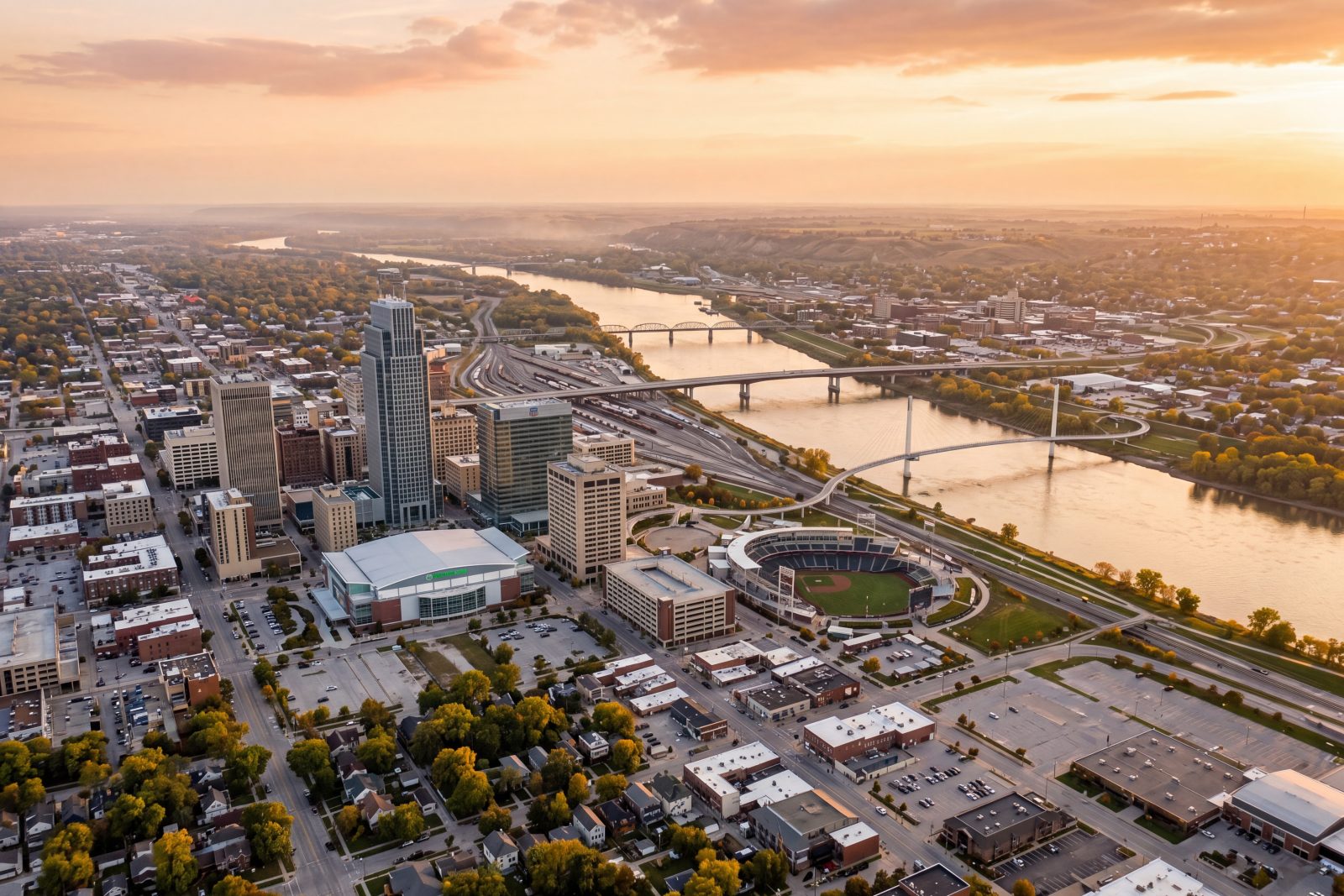
Landlord License Requirements in Nebraska 2026
Rental registration, business licensing, and the consequences of non-compliance under Neb. Rev. Stat. § 76-1401
Do you need a landlord license to rent out a property in Nebraska? In most of the state, the answer is no. Nebraska has no statewide rental registration and imposes no statewide landlord license. Any registration obligation is local only, set by individual cities under the framework of the Uniform Residential Landlord and Tenant Act, Neb. Rev. Stat. § 76-1401. Whether you must register depends entirely on where the rental sits: a single-family home in a rural county may face no registration at all, while the same unit in Omaha or Lincoln does.
The stakes are highest in those cities. Where a local program applies, failing to register or pass inspection can expose you to per-violation fines and, in jurisdictions that tie code compliance to housing court, can complicate or block your ability to file an eviction until the property is brought into compliance. Confirm your city's rules before you sign a lease or serve a notice, with Nebraska's average rent near $829, a stalled filing erodes a month's income fast.
Statewide vs. local: where Nebraska actually requires registration
There is no statewide rental registry or landlord license in Nebraska. The state's landlord-tenant relationship is governed by Neb. Rev. Stat. § 76-1401, the Uniform Residential Landlord and Tenant Act, which sets the rules for leases, deposits, and evictions, but does not create a registration mandate. Instead, registration is a local matter delegated to municipalities.
Two cities run the programs landlords most often encounter. Omaha operates a Rental Inspection Program, and Lincoln requires Rental Property Registration. Outside cities with their own ordinances, a Nebraska landlord may have no registration step at all. Because the obligation is set at the city level, the only reliable answer comes from checking with the municipality where your unit is located rather than assuming a uniform statewide rule.
Where and how to register: Omaha and Lincoln
If your rental is in one of Nebraska's two largest cities, plan to register and budget for the associated cost. In Omaha, rentals fall under the city's Rental Inspection Program, which pairs registration with periodic inspection of the unit for code compliance. In Lincoln, landlords complete Rental Property Registration and pay an annual fee of $100 per unit, plus any penalties for late or missing registration.
Practically, that means contacting the city's housing or planning department, listing each rental unit, and keeping the registration current year to year. Register before you advertise or place a tenant, doing it after a dispute has started is far more expensive. Keep copies of your registration confirmation and any inspection reports; they are the documents you will need if compliance is ever questioned during a code or court proceeding.
Penalties and the eviction-blocking risk
The cost of ignoring a local program is concrete. In Omaha, violations of the Rental Inspection Program carry a penalty of $250 per violation, and because each unit and each issue can count separately, fines compound quickly across a portfolio. In Lincoln, beyond the $100 per-unit annual fee, landlords who fail to register face additional penalties layered on top of the base charge.
The more serious exposure is procedural. In cities that tie rental registration and code compliance to the courthouse, an unregistered or non-compliant property can stall or block an eviction filing until the landlord cures the deficiency. Even where the link is informal, an opposing tenant or judge who learns the unit was never registered can use that fact against you mid-case. Registration is not just a fee, in the wrong moment it becomes the difference between a clean filing and a dismissed one.
A practical compliance checklist for Nebraska landlords
Use this sequence to stay clear of both fines and filing problems:
- Confirm your city's rule first. Check whether the municipality where your unit sits has a registration or inspection ordinance. Omaha and Lincoln both do; many smaller jurisdictions do not.
- Register before leasing. Complete Omaha's Rental Inspection Program enrollment or Lincoln's Rental Property Registration ($100/unit annually) before you advertise or place a tenant.
- Pass and document inspections. Schedule required inspections early and keep the reports.
- Renew on schedule and re-register when you add units, so a lapse never coincides with an eviction.
- Know your statutory baseline. Follow Neb. Rev. Stat. § 76-1401 for notices, deposits, and the eviction process statewide.
- Verify registration is current before filing. An up-to-date registration removes the easiest objection a tenant can raise.
Local Programs in Nebraska
Omaha (Rental Inspection Program), Lincoln (Rental Property Registration).
Penalty for Non-Compliance
The most consequential penalty in landlord-tenant law is rarely a flat fine, it is the loss of access to the eviction docket. In states and cities where registration gates eviction filings, an unregistered landlord with a non-paying tenant can face months of lost rent before the registration is cured and the case can be filed.
What This Means for Nebraska Landlords
Nebraska places the landlord-registration question at the local level. If you operate in a city with an active rental registry (Boston, Chicago, Philadelphia, NYC, Portland, Baltimore and similar), the registration is mandatory at the local level and frequently controls your ability to file for eviction. If you operate in a smaller market with no registry, your only filings will likely be a local business license and applicable state tax registrations.
The single most important diligence step is to call your municipality's housing or code-enforcement department directly and ask: (1) is rental registration required for my property, (2) is it current, and (3) what specifically would block me from filing for eviction on a non-paying tenant. The answers to those three questions are the entire game.
City-Level Eviction Risk in Nebraska
Local registration programs are most common in larger cities. View landlord risk and tenant-law profile by city:
Sources & Methodology
- Landlord-tenant code: Neb. Rev. Stat. § 76-1401, governing statute for Nebraska rental relationships.
- Local programs: Confirmed via municipal code search and city housing-department websites.
- Eviction-blocking effect: Where stated, drawn from cited statutes (N.J.S.A. 46:8-33, A.R.S. § 33-1902(D), Md. Real Prop. § 8-208.1, Phila. Code § 9-3902(4), MDL § 325, SMC § 22.214).
Related Guides for Nebraska Landlords
This page was prepared by the Eviction Risk Map research team and summarizes Nebraska's landlord registration landscape under Neb. Rev. Stat. § 76-1401, including the named local programs in Omaha (Rental Inspection Program) and Lincoln (Rental Property Registration). Last reviewed June 2026. City ordinances, fees, and inspection requirements change; confirm current rules with the relevant municipality before registering or filing. This is general information, not legal advice, consult a licensed Nebraska attorney for your situation.
Frequently Asked Questions
Do I need a landlord license to rent out property in Nebraska?
There is no statewide landlord license or rental registration in Nebraska. The state operates under Neb. Rev. Stat. § 76-1401, but any registration requirement is set locally by individual cities. If your rental is in Omaha or Lincoln, you must comply with that city's program; in many other areas, no registration applies. Confirm with the municipality where the unit is located.
What happens if I do not register my rental in Nebraska?
It depends on the city. In Omaha, violations of the Rental Inspection Program carry a $250 per-violation penalty. In Lincoln, landlords owe a $100 per-unit annual fee plus penalties for failing to register. Beyond fines, non-compliance can create problems if you later need to take a tenant to court, so it is far cheaper to register up front.
Can I evict a tenant if my Nebraska rental is unregistered?
Be cautious. In cities that link rental registration and code compliance to housing court, an unregistered or non-compliant property can stall or block an eviction filing until the issue is cured. Even where there is no formal bar, a tenant or judge who learns the unit was never registered can raise it against you. Verify your registration is current before you file.
Where do I register a rental property in Nebraska?
With the city, not the state. In Omaha, rentals fall under the city's Rental Inspection Program. In Lincoln, landlords complete Rental Property Registration and pay $100 per unit annually. Contact the relevant city's housing or planning department to enroll each unit, then renew on the required schedule and keep your confirmation and any inspection reports.
Statutory citation: Neb. Rev. Stat. § 76-1401. Last updated October 13, 2026. For informational purposes only, not legal advice. Local rules change frequently; verify with your municipality and consult a licensed Nebraska attorney before relying on these summaries.