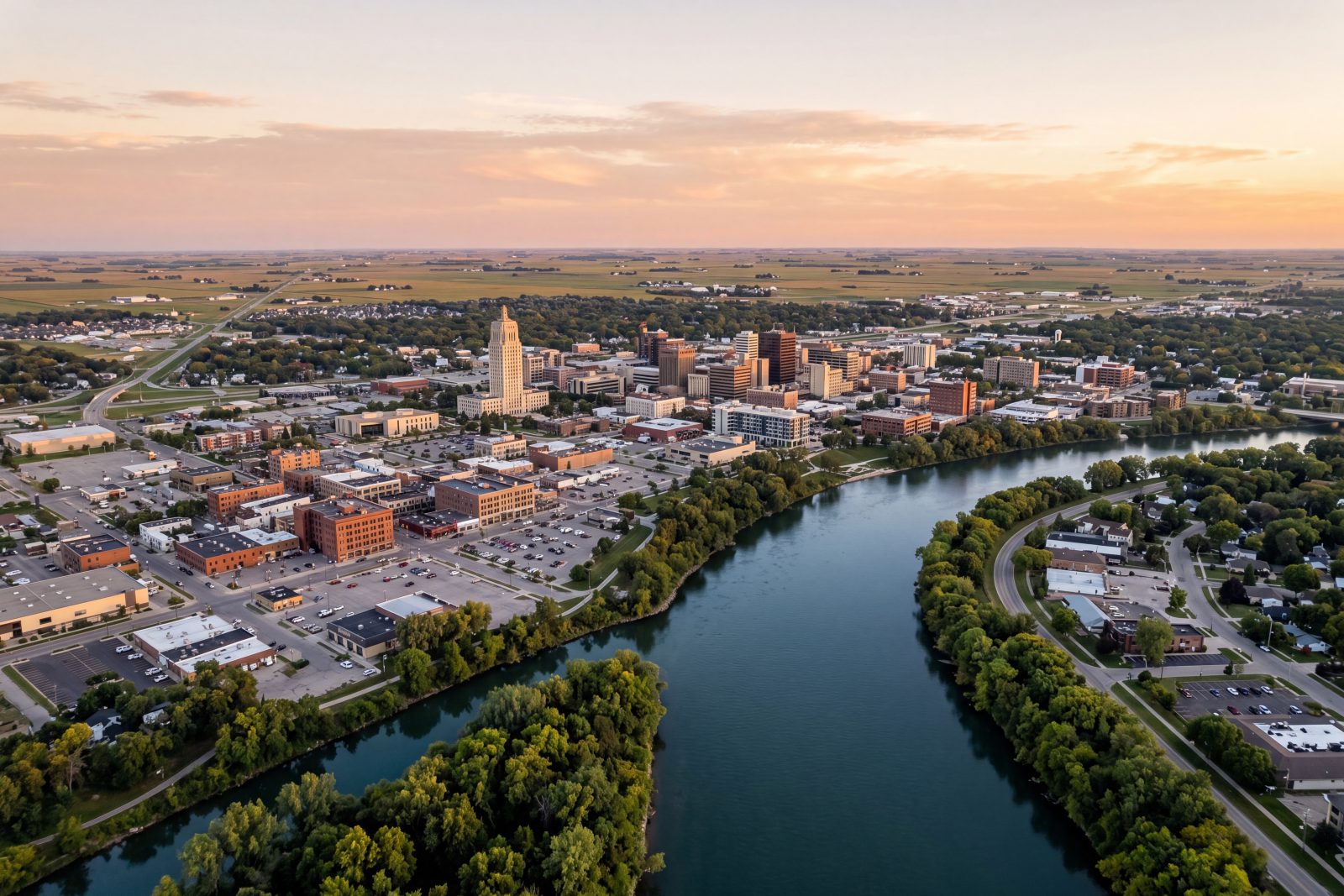
4 incorporated cities and unincorporated areas. The county Eviction Risk Score is held aloft by the city of Crosby (3.2) and a small number of dense urban cores. Rent-control coverage varies by city.
In 2026
Risk score
3.2
LOW
Ranked #46 of 53 ND counties
1k residents · 4 cities · 1 tracts
1976–2026 · pop-weighted from cities
Divide County eviction risk score history
Min1.5Average2.8Now3.2
197619861996200620162026
Key metrics
Tenant beats landlord
16.0%
/ 100 outcomes
In court-decided eviction outcomes for Divide County, ND, tenants prevail in roughly 16.0% of contested cases. A higher number means landlords face stronger tenant defenses and longer calendars.
Timeline
20d
filing → judgment
From the moment an unlawful-detainer notice is filed in Divide County, ND until a money judgment is entered, a contested eviction takes about 20 days on average. Longer timelines mean more lost rent for landlords.
Cost range
$0.8–2.2k
legal + lost rent
A typical eviction in Divide County, ND costs landlords $775 to $2,225 all-in, covering court filing fees, process-server costs, attorney time, and lost rent.
Average rent
$879
16% stretched on rent
Average gross rent in Divide County, ND is $879 per month per the U.S. Census American Community Survey. 16% of renter households here spend more than 30% of pre-tax income on rent.
Renters
25.7%
of households
25.7% of occupied housing units in Divide County, ND are renter-occupied. A higher renter share usually correlates with more eviction filings and a more active rental market.
Poverty
5.4%
3.8% unemp.
5.4% of Divide County, ND residents live below the federal poverty line, and unemployment runs at 3.8%. Both feed the economic-stress sub-score in our Eviction Risk Score model.
Time machine
Scrub 50 years
197619861996200620162026
2026
● LIVE · today◀ REPLAY · historical
Divide County's 3.2/10 (Low) reflects a low-pressure rental environment with a tight city spread of 3.1 to 3.2. The 16.3% average rent burden and strong state-law protections for landlords keep eviction risk among the lowest in North Dakota. Ranked 46th of 53 North Dakota counties - lower-risk tier.
How Divide County ranks in North Dakota
Lower number means more extreme, where #1 is the most
Eviction Risk Score
Very Low
#46of 53 ND counties3.2 / 10
#46 of 53 counties in North Dakota for landlord eviction risk.
Cost of living
Very Low
#44of 51 states (statewide)89.0 index
North Dakota ranks #44 of 51 states on overall cost of living (11.0% cheaper than the U.S. avg).
Housing services cost
Low
#39of 51 states (statewide)71.4 index
North Dakota ranks #39 of 51 states on housing services (28.6% cheaper than the U.S. avg).
Income spent on rent
Low
#33of 53 ND counties20.7% of income
#33 of 53 counties in North Dakota on % of income spent on rent.
Divide County sits in the extreme northwest corner of North Dakota - a sparsely populated oil-patch and grain-farming county of roughly 1,399 residents spread across four small towns. With an overall eviction risk score of 3.2/10 (Low), it ranks 46th of 53North Dakota counties, placing it in the lower-risk band of the state. Scores across the county's cities span a tight range of 3.1 to 3.2, reflecting consistently low tenant-protection pressure throughout the area.
The county seat, Crosby (population 1,065, the largest community), comes in at the low end of local risk at 3.2/10. Wildrose, the second-largest town at around 260 residents, registers the highest local score at 3.2/10 - still solidly in Low territory but noticeably above the county average of 3.2/10. Fortuna sits at 3.1/10, and Ambrose at 3.1/10 - both small agricultural hamlets where formal eviction proceedings are rare. The county-wide rent burden of 16.3% is among the lowest in the state, a reflection of modest rents averaging $879 per month and a renter share of just 25.7% of occupied housing units. With a poverty rate of 5.4%, landlords here face a tenant population that is, on the whole, economically stable relative to North Dakota norms.
North Dakota's statutory framework (N.D.C.C. § 47-16) is favorable to property owners: no just-cause requirement for evictions, no local rent-control ordinances (state preemption bars them), and notice periods that begin at just 3 days for non-payment or lease violations. An uncontested eviction typically resolves in 21 to 40 days at a court filing cost of $75 to $150, with sheriff lockout fees running $40 to $125. Even a contested case, where a tenant disputes the action in court, generally concludes within 45 to 100 days. Source-of-income discrimination protection does not apply in North Dakota, and the state's fair housing complaints funnel through the North Dakota Department of Labor and Human Rights. For landlords evaluating northwest North Dakota, Divide County's combination of low risk scores, minimal regulatory overhead, and stable local economics makes it one of the more straightforward operating environments in the region.
Divide County's 3.2/10 average covers a score spread of 3.1 to 3.2 across its four incorporated places. The 16.3% average rent burden and $879 average monthly rent point to a rental market where affordability pressure on tenants is limited, which directly suppresses eviction filing frequency. North Dakota eviction laws's landlord-friendly statutes reinforce that low-pressure environment at the legal level.
This page was researched and written by the Eviction Risk Map research team using North Dakota eviction laws statutory sources (N.D.C.C. § 47-16), U.S. Census Bureau American Community Survey rent and income data, and court-fee schedules current as of the last review date. Scoring methodology is described in full on the methodology page. Data is reviewed on a rolling basis; statute citations reflect the most recent legislative session reviewed.
Eviction filings in Divide County
In August 2024, 1 eviction filings were recorded in Divide County, 100.0% of the historical average (near average).1
1Aug 2024
100.0%of historical avg
209Renter households
7.3%Poverty rate
Last 14 months of filings2019-08 – 2024-08
Historical eviction filings in Divide County
From 2000 to 2016, eviction filings in Divide County increased.
The peak was 3 filings in 2011.2
02000
3Peak (2011)
02016
Annual filings 2000–2016No filing data published after 2018
Data covers 2000–2018, the full span of the Princeton Eviction Lab's national county court-records dataset.
How Divide County compares
Divide County's 3.2/10 score (Low) sits close to the North Dakota eviction laws state average of 3.4/10, reflecting the broadly landlord-favorable statutory environment shared across the state. Compared to peer counties with similar risk profiles - Adams, Burke, Towner, Dunn, and Nelson counties all cluster in the same low range - Divide is essentially indistinguishable in practical eviction-risk terms. Among lower-risk-tier North Dakota counties, minor score differences have little operational significance given that all of them operate under the same N.D.C.C. § 47-16 framework with no local rent control, no just-cause requirements, and comparable filing costs.
Peer counties in North Dakota
Same state, closest by population and Eviction Risk Score
Divide County scores 3.2/10, which is Low risk, ranking it 46th out of 53 counties in North Dakota. Individual city scores range from 3.1 to 3.2.
Q2
How long does an eviction take in Divide County, ND?
Under North Dakota law (N.D.C.C. § 47-16), an uncontested eviction in Divide County typically resolves in 21 to 40 days from notice to judgment. A contested case - where the tenant challenges the action in court - can extend to 45 to 100 days.
Q3
What notice is required before filing for eviction in Divide County?
North Dakota eviction laws requires a 3-day notice for non-payment of rent or a lease violation, and a 30-day notice for end-of-term or no-cause terminations. These are minimum statutory periods under N.D.C.C. § 47-16.
Q4
How much does it cost to file an eviction in Divide County?
Court filing fees in North Dakota eviction laws run $75 to $150. Sheriff lockout fees add $40 to $125. Attorney fees for a straightforward eviction action typically range from $500 to $2,500 depending on case complexity.
Q5
Is there rent control in Divide County or any North Dakota city?
No. North Dakota eviction laws state law preempts any local rent control ordinance, so no city or county in the state - including Divide County's communities - can cap rent increases. Landlords may raise rent without a statutory limit, subject only to lease terms and required notice.
Q6
Which city in Divide County has the highest eviction risk score?
Wildrose carries the highest score in the county at 3.2/10, followed by Fortuna at 3.1/10 and Ambrose at 3.1/10. Crosby, the county seat and largest community, scores 3.2/10.