
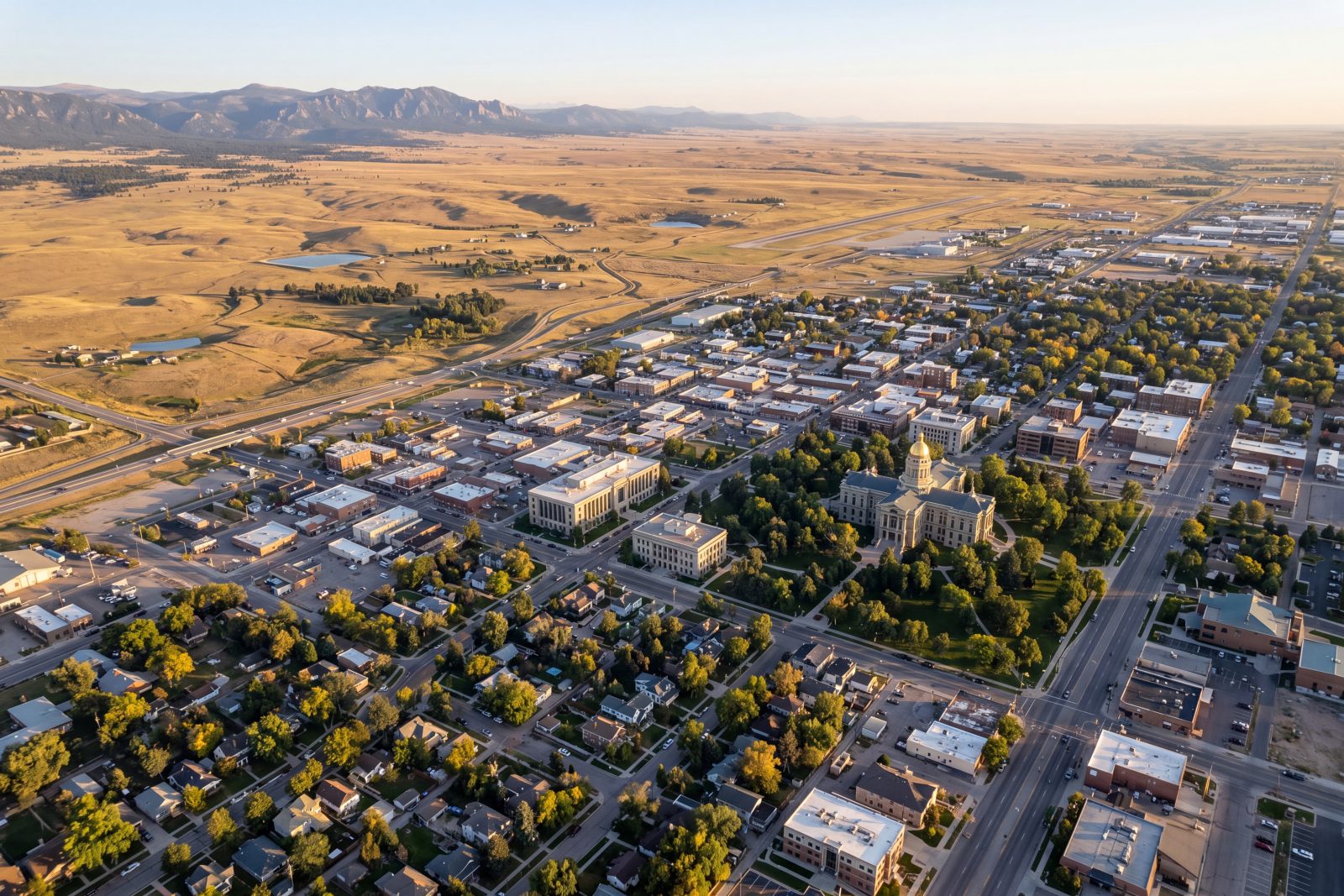
Rent Control in Wyoming
No statewide cap, state law prohibits local rent control
No statewide cap, state law prohibits local rent control
Wyoming landlords with 1-20 units: understand your state's rent control posture. It's distinct. This guide cuts through the noise, providing the practical bottom line for managing your properties without unnecessary risk. We cover the controlling statutes, key regulators, and what you need to know about evictions and rent adjustments in Wyoming.
First, the big picture: Wyoming has no statewide rent control. This is critical. Unlike states with complex rent stabilization ordinances, Wyoming maintains a landlord-friendly stance regarding rent increases. You generally have the freedom to set and adjust rents based on market conditions, provided you adhere to proper notice requirements. This absence of rent control means no caps on percentage increases, no limitations on how often you can raise rent, and no requirement to justify rent increases to a government body. This is a significant advantage for property owners here.
Your primary reference point for residential rental property law in Wyoming is Wyo. Stat. § 1-21-1201 et seq. (Residential Rental Property). This statute outlines the rights and responsibilities of both landlords and tenants. It covers areas like security deposits, notice periods for lease termination, and eviction procedures. While it doesn't impose rent control, it does set the framework for how you must operate as a landlord. There isn't a single, overarching state agency dedicated solely to regulating residential rental prices or approving rent increases. Disputes typically go through the court system. Local municipal governments also do not have the authority to implement their own rent control ordinances; state law preempts such local action.
For landlords with 1-20 units, the practical bottom line is straightforward: you control your rents. There's no rent board. No maximum allowable annual increase. No requirement to apply for an increase. However, "no rent control" does not mean "no rules." Your lease agreement remains the most important document. It dictates the terms of the tenancy, including rent amount, due dates, and any provisions for rent increases. Always review your lease terms carefully. If your lease specifies a fixed rent for a certain period, you cannot unilaterally increase the rent during that period without a lease amendment signed by both parties.
When you do increase rent, proper notice is non-negotiable. For month-to-month tenancies, you must provide adequate written notice, typically 30 days, before the rent increase takes effect. This allows your tenant time to decide whether to accept the new rent or vacate the property. Don't spring a rent increase on a tenant a week before it's due. That's a common mistake. Do provide the full 30-day notice, in writing, clearly stating the new rent amount and the effective date.
Wyoming's eviction process is also distinct due to the lack of statewide just-cause eviction requirements. This means you do not need a specific "just cause" (like lease violation or non-payment) to terminate a month-to-month tenancy, provided you give proper notice. This differs significantly from states or cities that mandate just cause for eviction, where landlords must prove a specific violation to remove a tenant.
A concrete example of a common landlord mistake here: assuming you can evict for non-payment with less than three days' notice. Or, attempting to evict a month-to-month tenant with a 15-day notice because you want them out quickly. Don't cut corners on notice periods. Do follow the statutory requirements precisely. Incorrect notice is a common reason for eviction cases to be dismissed, costing you time and money.
Wyoming has no statutory cap on security deposits. You can ask for whatever amount you deem appropriate. However, be reasonable. A deposit equivalent to one or two months' rent is standard. While there's no cap, Wyo. Stat. § 1-21-1207 does require you to return the security deposit within 30 days of lease termination or within 15 days after receiving the tenant's new mailing address, whichever is later. You must also provide an itemized list of deductions for damages beyond normal wear and tear. Failure to do so can result in the tenant suing for the full amount of the deposit and potentially additional damages.
As of recent legislative sessions (2024-2026), Wyoming has consistently resisted proposals that would introduce statewide rent control or expand tenant protections in ways that would limit a landlord's ability to manage their properties. While various tenant advocacy groups occasionally push for measures such as stricter limits on security deposits or just-cause eviction requirements, these proposals typically face strong opposition and do not advance far in the legislative process. The general sentiment in the Wyoming legislature remains focused on property rights and minimal government intervention in private contracts. Therefore, major shifts toward rent control or significant new tenant protections are unlikely in the immediate future. Landlords should, however, always remain aware of proposed legislation and engage with local landlord associations to stay informed about any potential changes, however minor, that could impact their operations.
In summary, Wyoming offers a favorable environment for landlords in terms of rent control and eviction flexibility. Your primary responsibilities revolve around clear lease agreements, proper notice for rent increases and tenancy terminations, and adherence to security deposit return procedures. Understand these rules, and you minimize your eviction risk. Ignore them, and you invite unnecessary complications and legal battles.
| Annual rent increase cap | No statewide cap | |
| Just cause required for eviction | No | |
| Local rent control allowed? | No, preempted by state law |
Wyoming state law expressly prohibits Wyoming cities, counties, and other political subdivisions from enacting rent-control or rent-stabilization ordinances, codified at Wyo. Stat. § 1-21-1201 et seq. (Residential Rental Property). Any Wyoming city-level ordinance purporting to limit residential rent on private market-rate units is unenforceable as a matter of Wyoming law. The preemption has been consistently upheld by Wyoming appellate courts and has been in force for decades in most cases.
A Wyoming landlord may raise the rent on a residential unit by any amount at the end of a lease term or on a month-to-month tenancy, subject only to three limits: (1) proper written notice of the increase, typically 30 days for a month-to-month tenancy, or whatever the lease provides for renewal of a fixed-term lease; (2) compliance with federal and Wyoming fair-housing law, a rent increase targeted at a protected class (race, color, religion, sex, national origin, familial status, disability, and additional Wyoming state classes) or at voucher-holders in jurisdictions that protect source of income is actionable; and (3) compliance with Wyoming anti-retaliation law, a rent increase issued within 6 months after a tenant code complaint, habitability report, fair-housing contact, or tenant-organizing activity is presumed retaliatory and the landlord must rebut with a documented non-retaliatory business reason.
Preemption of rent control does not bar Wyoming localities from regulating other aspects of the residential landlord-tenant relationship. Wyoming cities remain free to enact local just-cause termination ordinances, source-of-income discrimination rules, security-deposit interest requirements, stricter habitability and code-enforcement standards, mandatory tenant relocation assistance, eviction-filing moratoria, landlord-registration requirements, and rent-registry programs. Before treating a Wyoming rental as wholly unregulated, always check the current municipal code in the Wyoming city or county where the property is located for non-rent ordinances that still apply.
Comparing across states? See the national master list of U.S. cities with rent control, every city under a local ordinance or statewide cap, ranked by rent-control exposure.
No.
No.
Yes, statewide.
No.
Thin Wyo. Stat. Title 1 Chapter 21 framework; common-law habitability only.
Informational only, not legal advice. Consult a licensed Wyoming attorney. Source attribution in the Sources band below.